
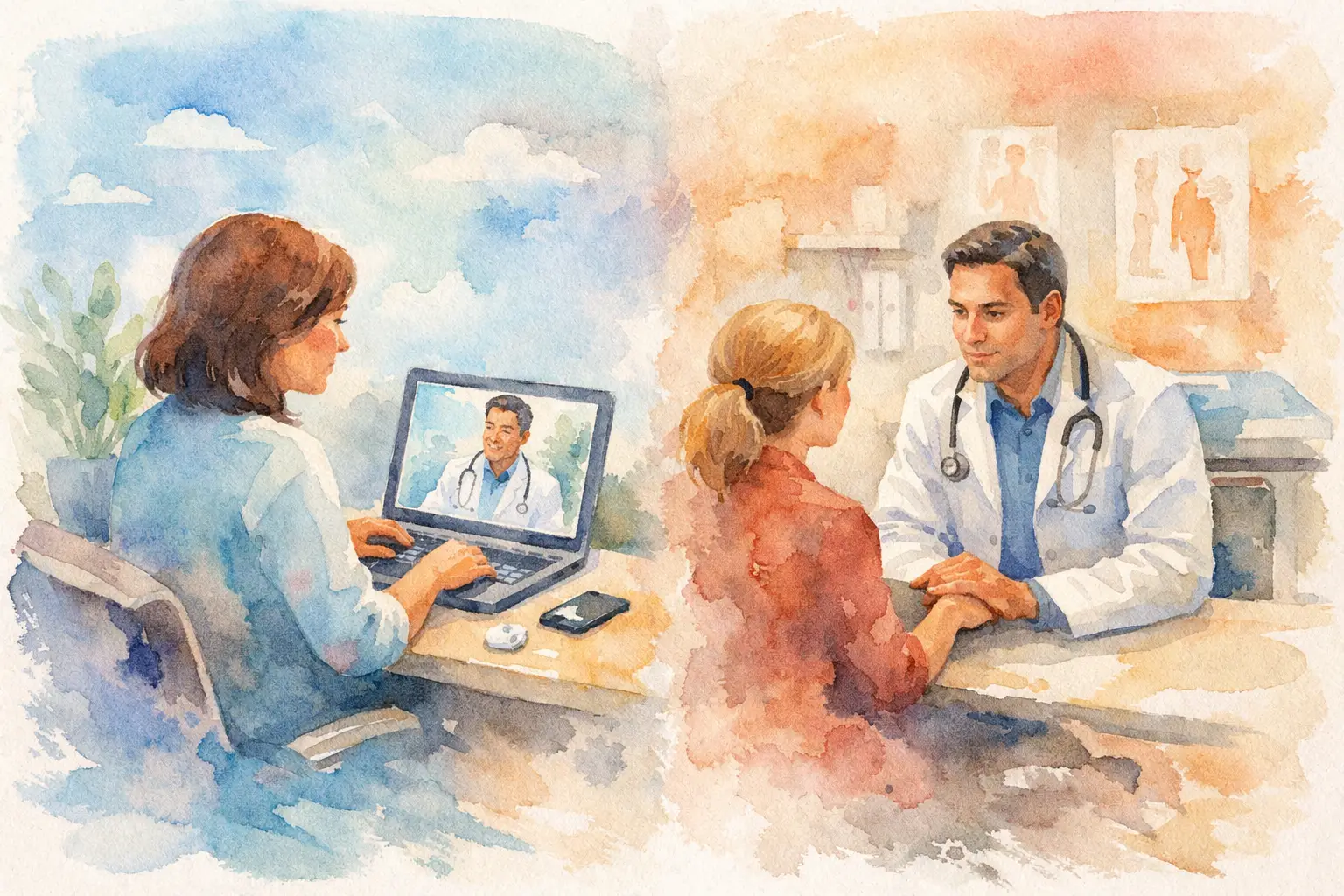
Telehealth vs In Person Doctor Visits
Choosing between remote and office visits depends on whether a condition requires physical examination, testing, or just verbal consultation. Telehealth works well for routine monitoring and mental health, while new or severe physical symptoms usually necessitate an in-person evaluation. Patient mobility, technology access, and the urgency of the medical issue should guide the final decision.
A medication refill, a new rash, a lingering cough, a follow-up after blood pressure treatment - many health questions no longer start in an exam room. When comparing telehealth vs in person doctor visits, the best choice often depends on what is being treated, how urgent it is, and whether a hands-on exam could change the answer.
For many adults, especially older adults managing more than one condition, this is less about convenience alone and more about getting the right care without delay. Telehealth can save time, reduce travel, and make it easier to check in with a clinician. In-person care still matters when symptoms need a physical exam, testing, or immediate treatment. Knowing where each option works best can help you avoid both unnecessary trips and unnecessary risk.
Telehealth vs in person doctor: what is the difference?
Telehealth usually means receiving care by video visit or phone call instead of going to a clinic. In some cases, it also includes remote patient monitoring, such as sharing home blood pressure or blood sugar readings with a care team. The exact services vary by provider and state rules, but the basic idea is the same: medical advice, evaluation, and follow-up delivered remotely.
An in-person doctor visit takes place in a clinic, urgent care center, or hospital office where the clinician can examine you directly. That matters because some parts of medicine still depend on touch, listening to the heart and lungs, checking reflexes, looking closely at the skin, or ordering tests on the spot.
Neither format is automatically better. Telehealth expands access. In-person care allows a fuller exam. Good care often uses both.
When telehealth is a good fit
Telehealth tends to work best when the main goal is conversation, review, or monitoring rather than a hands-on exam. Many routine follow-ups fall into this category. If you are discussing blood pressure readings you took at home, reviewing side effects from a new medication, checking in about sleep problems, or talking through mild cold symptoms, a virtual visit may be enough.
It can also be helpful for mental health care. Research has found that telehealth can be an effective option for many counseling and psychiatry visits, particularly when patients have privacy at home and feel comfortable using the technology. For people with mobility limitations, transportation challenges, or caregiving responsibilities, this access can make regular care easier to maintain.
Telehealth may also be practical for straightforward issues that are visible on camera, such as some eye irritation, minor skin concerns, or medication questions. Still, "visible" does not always mean "simple." A blurry image, poor lighting, or a symptom that seems minor can limit what a clinician can safely assess remotely.
Common reasons people choose telehealth
A virtual visit is often worth considering when travel is difficult, the problem is not severe, and you mainly need guidance, follow-up, or prescription management. It may also help you get care sooner, which matters when waiting several days for an office appointment could let a problem drag on.
For older adults, another advantage is easier involvement from family. An adult child or caregiver can often join the call from another location, which can make instructions clearer and reduce confusion about next steps.
When an in-person doctor visit is the better choice
Some symptoms require eyes, ears, and hands in the room. Chest pain, shortness of breath, severe abdominal pain, weakness on one side, heavy bleeding, high fever with worsening illness, dehydration, or signs of a possible emergency should not be managed through routine telehealth. Those situations may need urgent or emergency care.
Even when a problem is not an emergency, an in-person visit is often better if a clinician may need to listen to your lungs, feel your abdomen, examine a joint, remove earwax, test a urine sample, perform a throat swab, or order imaging and lab work quickly. A virtual visit can sometimes be the first step, but it may end with the advice to come in anyway.
This is especially true for new symptoms that are hard to describe, symptoms that are getting worse, or situations where a diagnosis could change based on physical findings. If you are not sure whether something is serious, asking for guidance is reasonable, but it is also reasonable to choose in-person care when you want a fuller evaluation.
Situations where hands-on care matters most
Physical exams remain important for heart, lung, abdominal, neurologic, and many orthopedic concerns. They also matter when a clinician needs to assess how a person looks overall - not just what they say. Subtle signs of distress, confusion, swelling, gait changes, or skin color changes may be easier to recognize in person.
For preventive care, many visits also work better face to face. Vaccinations, screenings, listening to the heart, checking feet in people with diabetes, and some annual exams all depend on direct care.
The trade-offs most people do not think about
Convenience is the most obvious benefit of telehealth, but it is not the only factor. The quality of a virtual visit often depends on preparation. If you have a reliable internet connection, a current medication list, home readings such as blood pressure or weight, and a quiet place to talk, telehealth can be very useful. Without those pieces, the visit may feel rushed or incomplete.
Technology can also create barriers. Some older adults are very comfortable with video visits, while others prefer phone calls or need help logging in. Hearing loss, vision changes, and memory concerns can make virtual care harder. In those cases, a family member, caregiver, or simpler format may help.
In-person visits have trade-offs too. Travel, waiting rooms, time off work for family caregivers, exposure to contagious illness, and physical discomfort during transportation are real concerns. For someone with limited mobility or no easy ride to a clinic, telehealth may improve access in a meaningful way.
Cost and coverage can vary, and the rules are not always simple. Because policies change, it is wise to ask your provider or insurer how a telehealth visit will be billed before the appointment if cost is a concern.
How to choose between telehealth and in-person care
A practical approach is to ask one question first: Does this problem need a physical exam, testing, or treatment that cannot happen through a screen or phone? If the answer is yes or maybe, in-person care is usually the safer choice.
If your symptoms are mild, familiar, and not getting worse, telehealth may be a reasonable starting point. It often works well for follow-ups, medication management, reviewing results, discussing chronic condition control, and deciding whether the next step should be home care, an office visit, or urgent evaluation.
It also helps to consider your own setup. Do you have the technology to be seen clearly? Can you describe your symptoms well? Do you have home tools such as a thermometer, blood pressure cuff, pulse oximeter, or glucose monitor that could give useful information? The more accurate information you can provide, the more useful telehealth becomes.
Making either visit more useful
Whether you choose telehealth or an office appointment, preparation can improve the visit. Write down your main concern, when it started, what makes it better or worse, and what medications or supplements you take. If you are caring for an older parent, have those details ready before the visit begins.
For telehealth, test your device, camera, and sound ahead of time. Sit in good lighting and keep any home readings nearby. For in-person visits, bring your medication list, glasses, hearing aids, and any questions you want answered. Small steps like these often make the difference between a clear plan and a frustrating appointment.
A balanced way to think about telehealth vs in person doctor care
Telehealth is not a lesser version of care, and office visits are not automatically more thorough in every situation. Each serves a different purpose. The strongest approach is often a mix: use telehealth when conversation, monitoring, and access matter most, and choose in-person care when diagnosis depends on examination, testing, or urgent treatment.
If you are deciding for yourself, a spouse, or an aging parent, it helps to trust both the symptom and the setting. A mild medication question at home is different from new chest pain, and a routine follow-up is different from a symptom no one can quite explain. When in doubt, contact a qualified healthcare professional and ask which format fits the problem best. The right visit is the one that gives you the safest path forward with the clearest next step.
Preferred Source
Enjoy The Health Almanac?
Add us as a preferred source on Google to see more Health Almanac articles in your Google results.
/archive/2026/07/10/telehealth-vs-in-person-doctor-visits